Kanji #0001
山 means “mountain”
山 (YAMA) means "mountain." It is one of the first kanji learners meet: it has only 3 strokes, and it looks like what it means.
Watch: Gen and Shibamaru learn 山
The video loads from YouTube when you press play. Open on YouTube
Where 山 comes from
山 began as a picture of a mountain range with three peaks. Over time the picture became three simple lines. The tall line in the middle is the highest peak, and you write it first.
Stroke order (3 strokes)
- 1
- 2
- 3
Words with 山
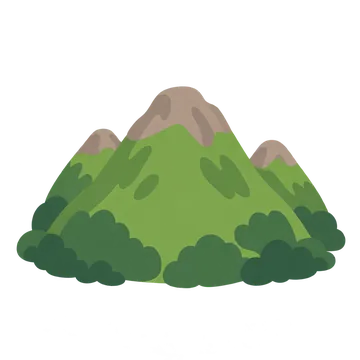
山やま
YAMA
mountain
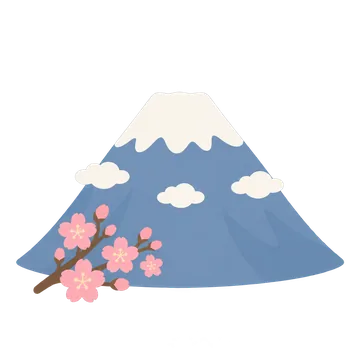
富士山ふじさん
FUJISAN
Mt. Fuji
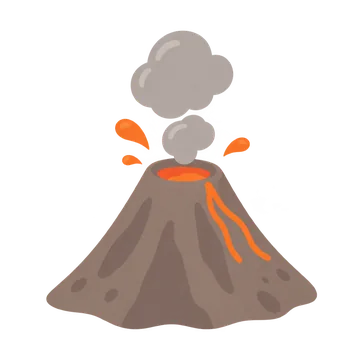
火山かざん
KAZAN
volcano
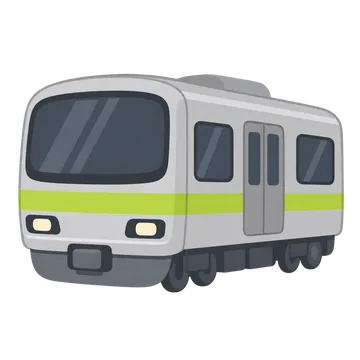
山手線やまのてせん
YAMANOTESEN
Yamanote Line
The part of each word written with 山 is shown in orange. Audio: the readings from our video.
Reading tips
- On its own, 山 is read やま (YAMA): 山にのぼります means "I climb a mountain."
- In words made of two or more kanji, 山 is often read サン (SAN), as in 富士山 (FUJISAN). Many mountain names in Japan end this way.
- Sometimes サン changes to ザン (ZAN) after another kanji, as in 火山 (KAZAN, volcano). This S-to-Z sound change happens in many Japanese compound words.
- The サン at the end of 富士山 is not the name ending さん (like Tanaka-san). It is just the kanji 山.
Gen's mistake
- Gen山手線って 山を走るの?Does the Yamanote Line go up a mountain?
- Shibamaruううん、東京を走る電車だよNo, it's a train in Tokyo!
The 山手線 (YAMANOTESEN) is a train line that loops around central Tokyo, through stations like Tokyo, Shinjuku, and Shibuya. There are no mountains on the way. The name comes from 山の手 (YAMANOTE), an old name for the higher, hilly part of the city.
Example sentences
山に のぼります。
YAMA NI NOBORIMASU.
I climb a mountain.
ふじさんは 日本で いちばん たかい 山です。
FUJISAN WA NIHON DE ICHIBAN TAKAI YAMA DESU.
Mt. Fuji is the highest mountain in Japan.
Keep learning kanji
Remembering the Kanji 1
Beginner and upLearn the meaning and the writing of over 2,000 kanji by building each one from its parts with a short story. Readings are not covered.
View on AmazonGENKI I Textbook (3rd Edition)
BeginnerA popular first textbook used in many university courses. Each lesson has a dialogue, grammar explanations in English, and plenty of practice.
View on Amazon
Stroke order data: KanjiVG © Ulrich Apel, licensed under CC BY-SA 3.0. The kanji graphics on this page are drawn from KanjiVG data (stroke width and color changed, animated) and are shared under the same license. Level: JLPT N5 is a study guide only; JLPT does not publish an official kanji list.